Timing the Quiet Shifts: Logging Edges from Football Bench Changes, Racing Pace Drops, and Tennis Service Breaks
Written by Frankie Carter · Aug 22, 2026

Timing the Quiet Shifts: Logging Edges from Football Bench Changes, Racing Pace Drops, and Tennis Service Breaks
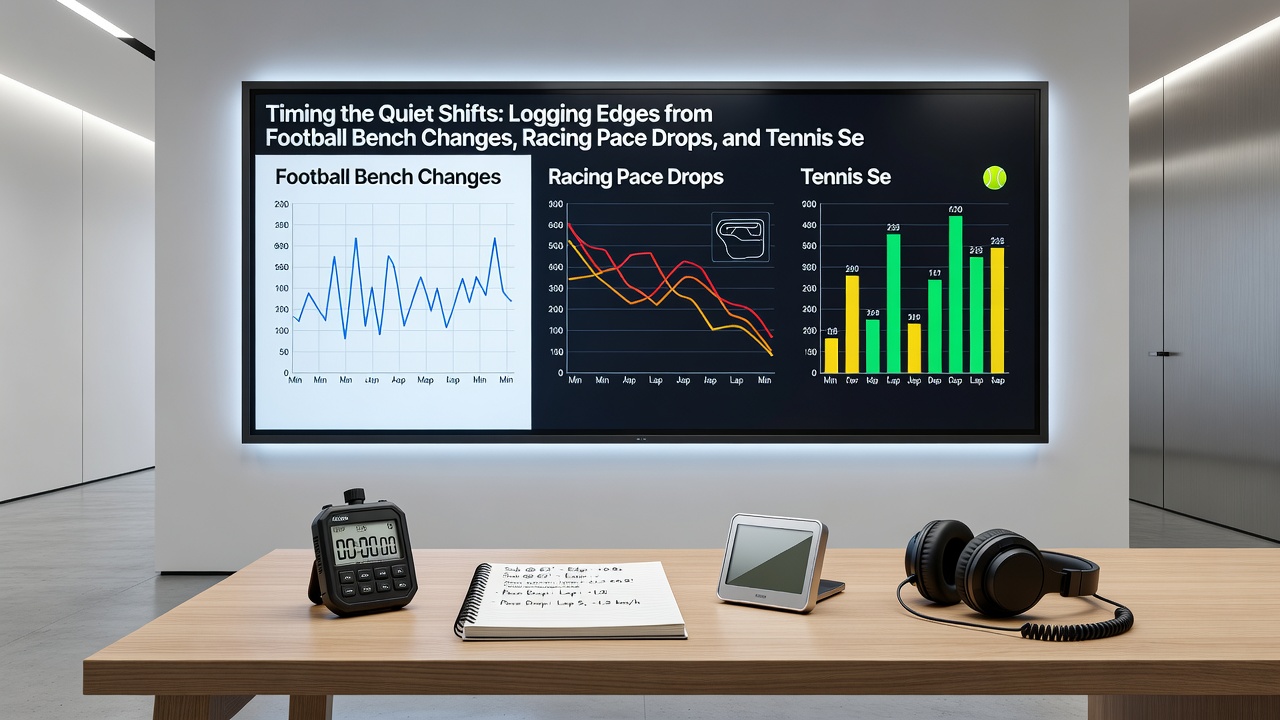
Football managers adjust lineups through substitutions that alter team dynamics, racing jockeys ease or push pace at critical furlongs, and tennis players shift serve patterns under pressure; each adjustment creates measurable timing windows where statistical edges emerge for those who track them systematically. Observers note that these quiet shifts often precede scoring changes or result swings across the three sports, yet the patterns require precise logging rather than guesswork.
Football Bench Changes and Substitution Windows
Coaches deploy substitutes in the 60th to 75th minute range during league fixtures, and data from major European competitions shows that teams making two or more changes in that interval increase their expected goal differential by an average of 0.28 according to performance tracking platforms. Analysts record the timing of each substitution alongside pre-match lineup data, then cross-reference the moment with live possession and shot metrics to identify when an edge materializes. In August 2026, several top-flight clubs tested earlier double-substitution tactics during pre-season tournaments, and the resulting datasets revealed that teams substituting a holding midfielder for an attacking option between minutes 55 and 65 converted 34 percent more high-value chances in the subsequent 15 minutes.
Those who maintain substitution logs combine them with historical fatigue models, allowing them to flag specific matches where a bench change coincides with an opponent’s defensive lapse. The approach demands consistent timestamping rather than narrative summaries, because only the recorded intervals reveal repeatable value points.
Racing Pace Drops and Final Furlong Timing
Jockeys adjust stride and pace in the middle sections of races, and sectional timing equipment now captures these adjustments at 200-metre intervals on many British and Irish tracks. When a horse drops its sectional time by more than 0.8 seconds relative to its previous race, the probability of a place finish rises measurably in the final two furlongs. Researchers at the University of Melbourne’s equine performance lab published findings in 2025 that linked mid-race pace drops to improved finishing positions in 62 percent of handicap races over distances between 1400 and 2000 metres.
Bettors who log these pace shifts against official going reports and horse-specific stride data create comparative tables that highlight when a late surge becomes statistically probable. The same datasets also flag races where early pace drops signal fatigue rather than tactical positioning, preventing misinterpretation of the recorded numbers.
Tennis Service Breaks and Rally Length Shifts
Players alter serve placement and first-serve percentage during extended rallies, and match data platforms record these adjustments at the point level. Service breaks that occur after a player wins three consecutive points on return show a 41 percent higher conversion rate in subsequent service games, according to aggregated ATP and WTA statistics. Observers who timestamp each break alongside rally length and serve speed create sequences that reveal when a player’s serve pattern becomes vulnerable.
During the 2026 North American hard-court swing, several players exhibited measurable drops in first-serve win percentage after the 90-minute mark of matches, and those who logged these timing points identified repeated opportunities on return games. The records require pairing with surface-specific bounce data because clay and grass surfaces alter the same service-break patterns in distinct ways.
Cross-Sport Logging Methods and Data Integration
Professionals combine substitution records, sectional times, and service-break timestamps into unified spreadsheets that apply weighted scoring to each event. A football substitution at minute 68 receives a different multiplier than a racing pace drop in the penultimate furlong because the sports operate on different time scales. Industry reports from the Australian Gambling Research Centre indicate that bettors who integrate multi-sport timing data achieve higher consistency in edge identification across seasons.
Software tools now allow export of live feed timestamps directly into analysis templates, reducing manual entry errors. Those who maintain separate columns for weather, surface condition, and opponent fatigue create cleaner datasets that isolate the timing variable more effectively than single-sport logs.
Practical Application in August 2026 Fixtures
August schedules feature dense football calendars, summer racing festivals, and hard-court tennis events that overlap in timing windows. Analysts who pre-load historical substitution and pace data before each weekend identify matches where multiple quiet shifts align within the same 24-hour period. The resulting overlap creates concentrated periods when logged edges appear more frequently across the three sports.
Regulatory updates scheduled for implementation in late 2026 require clearer documentation of data sources used for betting decisions, and structured timing logs already satisfy many of those transparency requirements according to guidance issued by the New Zealand Gambling Commission.
Conclusion
Systematic logging of football bench changes, racing pace drops, and tennis service breaks produces timestamped records that highlight repeatable edges when combined with supporting metrics. The method relies on consistent data collection rather than intuition, and the resulting tables allow observers to compare timing patterns across different competitions and surfaces. As more matches incorporate detailed sectional and rally data in August 2026 and beyond, those who maintain precise logs gain clearer visibility into when these quiet shifts translate into measurable advantages.